
Why delaying a roof replacement is a bigger risk than it seems
“It’s not leaking yet.” That’s the line many homeowners use to justify the cost of delaying a roof replacement. But the truth is, by the time your roof does start leaking, you’re often dealing with more than just a surface issue. Water damage. Structural rot. Mould. And a repair bill that goes well beyond shingles.
Delaying a roof replacement may seem like a way to save money in the short term, but it often leads to higher costs, increased disruption, and avoidable stress down the line. Your roof not only protects what’s inside, but it’s part of your home’s structural health. Letting it slip puts everything beneath it at risk.
That’s why the cost of delaying a roof replacement becomes something you can’t ignore. Think of it as the roofing version of compound interest, except in this case, you’re investing in future problems. And if you’ve ever tried to sleep through a drip-drip-drip in the middle of the night, you know some costs are louder than others.

Roofing problems over time: what actually happens when a roof starts to fail
Most roof failures don’t start with a dramatic leak. They start quietly: a lifted shingle edge, dried-out sealant, or a bit of frost damage in the attic. These small issues often go unnoticed, especially if you’re not looking at the roof closely. But over time, they allow water to seep in under the surface.
Once water gets into your roofing system, it can compromise the underlayment, insulation, rafters, and even drywall. The longer it goes unchecked, the more costly it becomes to repair. What starts as a preventative replacement becomes a multi-trade restoration. An overlooked cost of delaying a roof replacement.
In the attic, even minor leaks can flatten or soak your insulation, reducing its R-value and creating a feedback loop of condensation and trapped humidity. Left untreated, this can lead to mould growth on the underside of your roof sheathing, which is unseen but steadily growing.
If you’re unsure about your roof’s condition, it’s worth getting a professional opinion. Gateway’s certified team does full assessments, especially useful when you’re trying to separate regular wear from early-stage roofing problems over time. You can also explore our broader roofing services in Hamilton to see how we handle everything from minor repairs to full replacements.

Delaying a roof replacement costs money, and it compounds the damage
It’s easy to look at roof replacement as a major cost and to push it down the list. But here’s what often gets missed:
- Moisture buildup can lead to mould growth behind walls and insulation
- Structural rot in trusses and sheathing may require framing repairs
- Insulation damage reduces your home’s energy efficiency
- Water-damaged areas can attract pests looking for warmth
- Delays affect home inspections and reduce resale value
Insurance coverage may also be limited if damage is considered due to neglect. And a patched roof doesn’t always pass inspection when it’s time to sell or refinance.
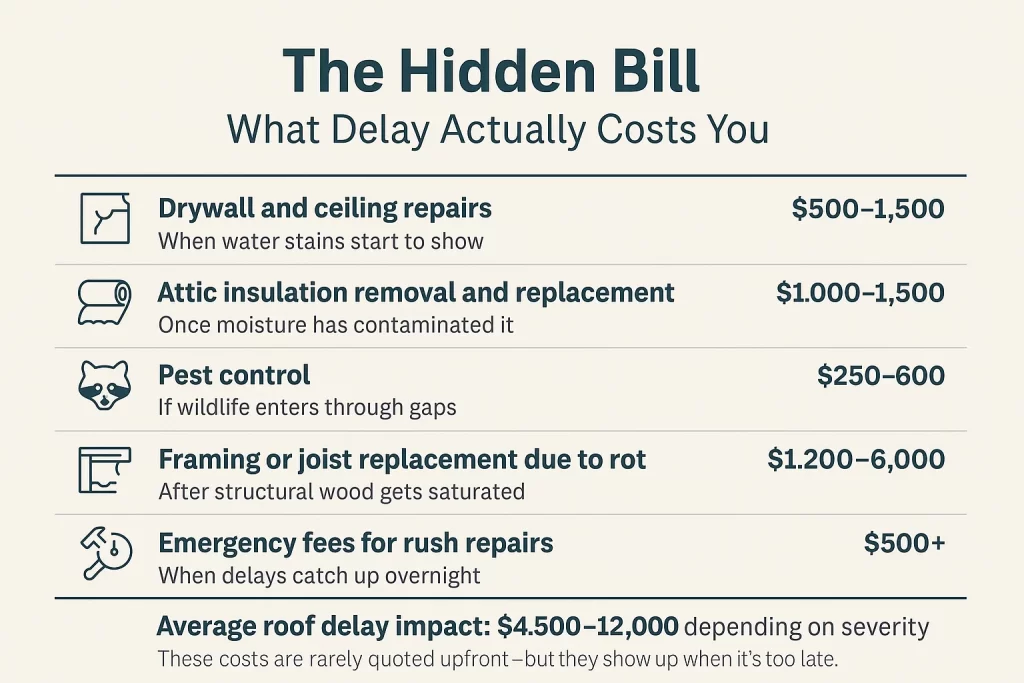
The upfront cost of a replacement can be significant, but it’s predictable and controlled. If you’re unsure what to expect, our guide to roof replacement cost in Ontario breaks down the numbers clearly. Waiting turns that cost into a wildcard. For example, spending $600 to patch a roof each spring for three years might delay the inevitable. But when the sheathing rots or the attic mould sets in, that turns into a $12,000 structural repair on top of the replacement. The cost of delaying a roof replacement usually adds layers you didn’t plan for.
In fact, nearly 94% of North American roofing projects are full replacements, a clear sign that patch jobs only go so far before the real work kicks in. The price tag may not scream at you right away, but it’s waiting around the corner with a crowbar and a sense of irony.
Common misconceptions about cost of delaying a roof replacement
There are a few myths that keep people from taking action sooner:
“It’s cheaper to patch than replace.” Patching is only effective in very limited cases. If your roof is near end-of-life, patches are stopgaps at best.
“No leak means no problem.” Leaks are often the last sign, not the first. Damage can accumulate for months before it becomes visible inside.
“I’ll deal with it next season.” Ontario’s weather shifts quickly. Fall delays often mean spring surprises.
At Gateway, we scope what’s actually needed. If a patch makes sense, we’ll say so. If a full replacement is warranted, we’ll explain why. And we’ll also show you when the cost of delaying a roof replacement could backfire, because no one wants their attic to turn into an accidental science experiment.
Roof repair timeline: how GHA winters and spring thaws make timing everything
In the Greater Hamilton Area, cities like Stoney Creek, timing matters. Our spring thaws, heavy spring rains, and sudden snow loads make roofing more vulnerable than in milder climates. Small vulnerabilities in the fall can turn into leaks by March. And spring replacements get booked quickly, leaving less flexibility for emergency repairs.
Selling your home soon? A deteriorating roof can delay deals, reduce offers, or increase buyer demands. Home inspectors often flag signs of patchwork or aging materials, which can scare off buyers or create issues with financing. Being proactive protects your negotiating position, allowing you to avoid another cost of delaying a roof replacement.
After a storm? It’s better to assess early than assume all is fine, especially if you’ve already noticed those classic roof deterioration signs: lifted shingles, sagging spots, or stained ceilings.
If you have kids or pets, timing matters even more
Families often hesitate to start big exterior work because they don’t want disruption. But unexpected leaks or damage repairs are far more disruptive than a planned job. Gateway crews show up on schedule, clean up thoroughly, and move carefully around pets and outdoor play areas.

What to do if you’re unsure or not ready to commit
You don’t need to make a snap decision. But you do need a clear understanding of what’s happening now. An inspection from Gateway can confirm whether you have a few good years left or if it’s time to replace your roof.
We explain what we see, why it matters, and what your options are. No pressure. Just that facts that will help you make a smart call on your timeline.
Don’t wait until it’s too late
The cost of delaying a roof replacement might save you money this season, sure, but like skipping dentist visits, the bill tends to show up eventually with extra pain attached. But it can cost you far more next year. Structurally, financially, and logistically, the sooner you act, the more control you keep. You don’t need to wait until it leaks to make the case, and delaying a roof replacement just shifts the cost from one line item to three. It’s not procrastination, it’s more like pre-scheduling your future regrets.
And while the cost of waiting to replace your roof might not show up all at once, it builds with every season of delay.
Not sure if you need one yet? Check out how to tell if you need a new roof to know what to look for before things get worse.
Pro roof owner tip:
Before you call, take photos of your attic and ceilings after a heavy rain. It can help confirm where issues are starting.
What the cost of delaying a roof replacement looked like for John and Susan in Binbrook
John and Susan put off their roof replacement for over a year. It wasn’t leaking, it was just a bit worn. Or so they thought. By spring, they noticed a musty smell upstairs. Their attic insulation had absorbed moisture from a slow leak near a vent, and mould had started to spread. What could have been a clean two-day job turned into a full attic tear-out and partial ceiling replacement. That delay cost them over $8,000 in extra work, not to mention the stress of vacating bedrooms for remediation crews.
Turns out, it was leaking after all, just not where they could see it.