
After last winter’s ice dam caused a ceiling stain, Mark and Andrea in Ancaster knew the roof needed replacing. But the big question was: asphalt or metal?
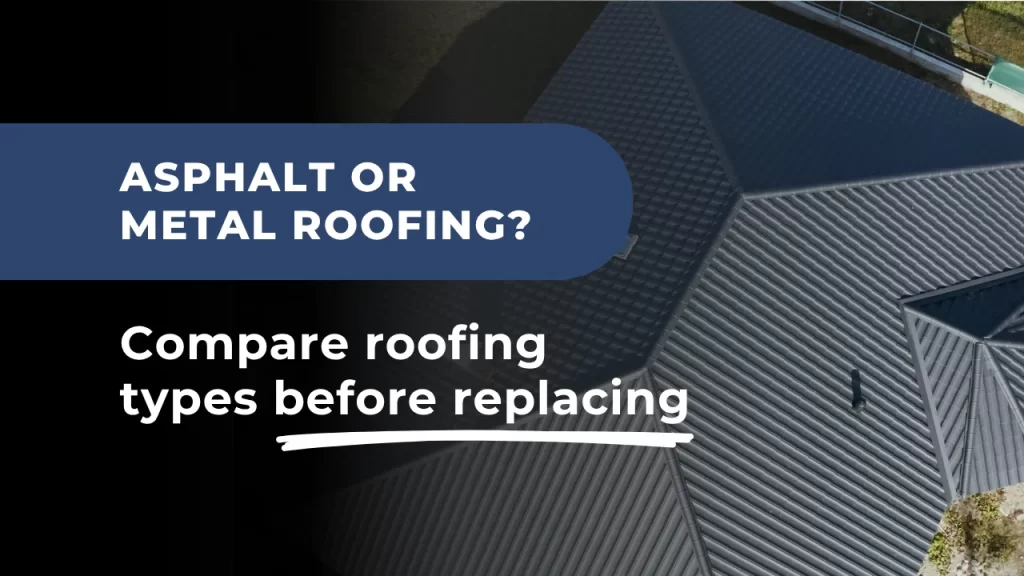
When your roof starts showing its age, material choice quickly becomes the top priority. Asphalt vs metal roofing is one of the most common and most debated decisions Ontario homeowners face. Some are looking for long-term reliability. While others might be prepping for a sale. Either way, the decision has lasting consequences.
At Gateway Exteriors, we help homeowners across Hamilton, Ancaster, and Binbrook make informed roofing choices for their homes, goals, and the best-performing materials for Ontario’s climate. If you’re already looking into options for a new roof installation, understanding the pros and cons of your materials is a great place to start.
Material Breakdown: Cost, Durability, And Installation Differences
Here’s how asphalt vs metal roofing compares when you lay out the facts.
Initial Cost
Asphalt shingles tend to be the more budget-friendly choice upfront. Material and labour costs are typically lower than those of metal, making it a popular choice for homeowners trying to stay within a tight renovation budget.
Metal roofing comes with a higher price tag. But many homeowners see the tradeoff as worthwhile, especially once they understand the cost of delaying a roof replacement.
Lifespan and Warranties
A standard asphalt roof typically lasts 15–25 years, depending on the quality of the shingles, ventilation, and maintenance. But, it’s not only about durability; what’s covered under your roofing warranty is equally important. Metal roofing often lasts 40–70 years, with warranties that reflect that longer lifespan.
Weather Performance
Ontario winters put any roofing system to the test. Asphalt shingles perform well in handling snow and ice when installed with proper underlayment and attic ventilation. But they’re more prone to damage from wind uplift and changing temp cycles over time.
Metal roofs shed snow more easily, reduce the risk of ice dams, and are more resistant to wind and impact. Their performance in heavy storms is one reason they’re gaining popularity locally.
Aesthetic Considerations
Asphalt shingles come in a range of textures and colours that blend easily into most neighbourhoods. They’re familiar, and many homeowners like that traditional look.
Metal roofs are now available in panel and shingle-style formats, featuring finishes that mimic the appearance of slate or shake. While some still perceive them as “too industrial,” today’s design options make them a fit for nearly any home style.
Installation Complexity and Timeline
Asphalt roofs are typically quicker to install, especially as a replacement option where decking is intact.
Metal installations take longer, require more specialized equipment, and must be measured and fabricated with greater precision. That added complexity is part of the cost, but also part of the long-term performance.
If you’re unsure which material best fits your goals, we’ll walk the property and provide a scoped, unbiased recommendation.
Comparison Table: Asphalt vs Metal Roofing
| Category | Asphalt Shingles | Metal Roofing | Winner |
|---|---|---|---|
| Initial Cost | Lower upfront cost | Higher upfront cost | Asphalt |
| Lifespan | 15–25 years | 40–70 years | Metal |
| Snow Management | Holds snow unless sloped well | Sheds snow naturally | Metal |
| Sound in Rain | Quiet with attic insulation | Slightly louder, but negligible | Tie |
| Appearance | Traditional, familiar | Range of profiles and finishes | Tie |
What Homeowners Often Get Wrong About Asphalt Vs Metal Roofing
We’re often called 3–5 years after a poor roofing job, or when repeated winter damage takes its toll. Material choice matters more than many homeowners realize at the time of install.
“Metal roofs are always louder in the rain”
Not necessarily. With proper insulation and attic assembly, metal roofs are only slightly louder than shingles during rain, but the difference is negligible in most homes. The “tin roof” stigma mostly stems from older roofs that lack insulation.
“Shingles are fine unless they leak”
Leaks are often the last symptom, not the first. Granule loss, curling edges, and missing flashing are signs that a roof is nearing the end of its life. If you’re seeing any of those, it may be time to replace your roof. Waiting until water comes in usually means more interior repairs.
“Metal roofs look too industrial”
That used to be true. However, today’s metal options include low-profile panels and shingle formats that blend seamlessly with nearly any architectural style, including those found when comparing the best types of roofing materials for your needs.
“You can always just patch asphalt”
Patching works for isolated damage, but repeated fixes add up. Eventually, full replacement becomes more cost-effective and more reliable.
At Gateway, we help homeowners scope what’s needed, especially when they’re weighing asphalt vs metal roofing and aren’t sure who to trust. If your roof has life left, we’ll tell you. If a full replacement is the smarter option, we’ll explain why.
Questions to Ask When Choosing a Roofing Material
- What’s my budget, and how long do I plan to stay?
- What’s typical for homes in my neighbourhood?
- Do I plan to add solar or other energy upgrades?
- How does snow load affect my current roof?
Ontario-Specific Considerations: Climate, Resale, And Neighbourhood Norms
Climate Stressors
Ontario’s seasonal shifts are particularly challenging for roofing systems. Ice damming and heavy snow loads can all accelerate roof aging.
Metal’s ability to shed snow and resist water backup makes it especially strong in these conditions. Asphalt, with proper ventilation and installation, still performs well but may require more attention as it ages.
Resale & Market Perception
In many Hamilton-area neighbourhoods, asphalt shingles are the norm, making them a straightforward option for resale. But high-end metal roofs can signal long-term durability and quality workmanship that buyers appreciate, especially on newer or renovated homes.
Insurance & Energy Efficiency
Some insurers offer premium discounts for metal roofs due to their resistance to hail and fire. Reflective metal finishes can also help reduce attic heat gain in the summer months. In fact, a U.S. study has shown that metal roofing with reflective coatings can reduce summer cooling loads by 10–15% compared to darker asphalt options, particularly in homes with attics.
Common Tradeoffs by Scenario:
- Selling in 2–3 years? Asphalt may make more financial sense.
- Staying 15+ years? Metal often pays off long-term.
- Planning solar? Consider how panel installation affects the lifespan of your roofing.
What To Do If You’re Not Sure Which Way To Go
You don’t have to figure this out on your own. The next step is simple:
- Book a roof inspection or quote
- Talk through your goals (budget, timelines, energy performance, resale plans)
- Get a proper scope from a team that won’t upsell you
We’ve helped homeowners across the region weigh their options when it comes to asphalt vs metal roofing because every home and priority is different.
Explore Our Residential Roofing Options
At Gateway, every job has a single point of contact, from quote to cleanup. Our crews are certified, our installs are to code, and our finish work is clean.
We don’t push what you don’t need. We help you choose what lasts.
Questions Homeowners Ask About Metal Vs Asphalt Roofing
Can you install metal over shingles?
Sometimes. However, it depends on the condition of the current roof and local building codes. A proper inspection is key.
Are metal roofs more prone to lightning?
No. Metal conducts electricity, but it doesn’t attract lightning. In fact, metal roofs can help safely disperse electrical energy if struck.
How does metal roofing naturally shed snow?
Metal has a smooth surface that reduces friction, allowing snow to slide off more easily. Combined with roof slope and sunlight warming, this helps prevent buildup and ice dams.
Does metal roofing require more maintenance than asphalt?
No. Metal roofs generally require less maintenance over time. They resist rot, insects, and mould, and don’t degrade as quickly under UV exposure or storms.
Will a metal roof make my house hotter in the summer?
No. Many metal systems are coated with reflective finishes that reduce heat gain in attics. With proper ventilation, metal can actually help regulate summer temperatures.
Can I walk on a metal roof?
Yes, but it depends on the roof profile and installation method. It’s safe when done correctly, but walking should be limited and ideally left to a professional.