
Most homeowners rarely think about their attic — until a problem shows up.
But did you know that the space above your ceiling could be quietly damaging your roof?
Proper attic ventilation is one of the most overlooked factors in roofing health.
Without it, heat, moisture, and condensation build up over time — warping materials, rotting wood, and cutting years off your roof’s lifespan.
Let’s take a closer look at why attic ventilation matters, how it works, and how you can tell if your roof is at risk.
1. Why Attic Ventilation Matters
Your roof and attic form a connected system. When air can flow freely from intake vents (usually at the soffits) to exhaust vents (at the ridge), it prevents excess heat and moisture from getting trapped.
Without that airflow, your attic essentially becomes a giant oven in summer and a frost factory in winter.
Here’s what that means for your roof:
- Shingle damage: trapped heat makes shingles curl and blister.
- Mold and rot: trapped moisture breeds mold and weakens wood decking.
- Ice dams: in winter, warm attic air melts snow that refreezes at the eaves, causing leaks.
- Energy loss: your HVAC system works harder trying to balance temperature extremes.
Pro Tip: Good ventilation balances intake and exhaust — roughly 1 square foot of venting per 300 square feet of attic space.
2. The Signs of Poor Ventilation
Not sure if your attic ventilation is doing its job?
Watch for these red flags:
- Shingles curling, cracking, or losing granules
- A hot, stuffy attic (especially in summer)
- Frost, condensation, or a musty smell in winter
- Mold or water stains on the underside of the roof deck
- Ice dams forming along the roof edges
If any of these sound familiar, it’s worth getting a professional inspection.
At Gateway Exteriors, we often find that roofing problems blamed on “old shingles” actually start in the attic.
3. How Proper Ventilation Extends Roof Life
Balanced ventilation protects your roof from both heat and humidity — two of the most damaging forces in Ontario’s climate.
Here’s how it helps:
- Keeps attic temperature closer to outdoor temperature, reducing stress on roofing materials.
- Prevents moisture buildup that leads to wood rot and insulation damage.
- Reduces the risk of ice dams and winter leaks.
- Lowers utility costs by improving energy efficiency year-round.
Tip: If you’re installing a new roof, make sure your ventilation system is reviewed and upgraded at the same time — it’s one of the most cost-effective ways to extend your roof’s lifespan.
You might also like: Signs of Roof Ventilation Problems You Shouldn’t Ignore
4. Common Ventilation Types (and How They Work)
Every home is different, but here are the most common systems used in Ontario homes:
| Vent Type | Location | Purpose |
|---|---|---|
| Soffit vents | Under the eaves | Allow cool air into the attic |
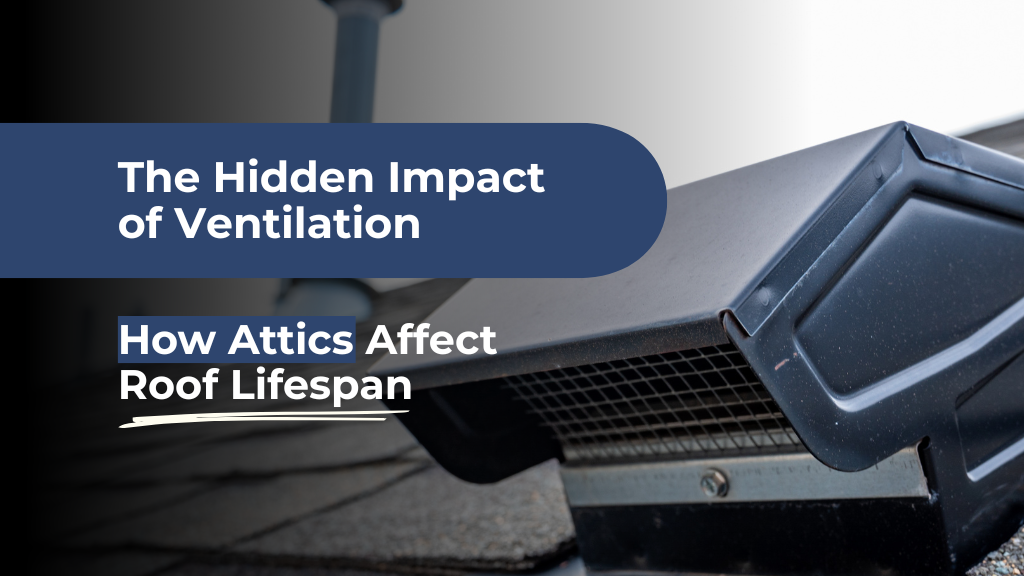
| Ridge vents | Along the roof peak | Let warm, moist air escape |
| Gable vents | On exterior walls near roof peak | Supplement airflow |
| Roof turbines / power vents | Mounted on roof | Mechanically enhance air circulation |
The key isn’t just having vents — it’s having the right balance between intake and exhaust so air can flow continuously.
5. How to Improve Your Attic Ventilation
If your home shows signs of poor airflow, here are steps you can take:
- Inspect soffits: Make sure they aren’t blocked by insulation or paint.
- Add ridge vents: If your roof doesn’t have them, they can dramatically improve ventilation.
- Check attic insulation: Proper insulation helps prevent heat transfer and moisture buildup.
- Schedule a professional inspection: Experts can measure airflow and humidity levels to recommend the right fix.
At Gateway Exteriors, our team checks ventilation as part of every roofing project — because a roof isn’t just shingles, it’s a system.
Final Thoughts
Your attic might be out of sight, but it shouldn’t be out of mind.
Proper ventilation is the hidden key to longer roof life, lower energy bills, and a healthier home.
If you’re unsure how your attic is performing, schedule a roof and ventilation inspection with Gateway Exteriors.
We’ll help you identify problems before they lead to costly repairs.