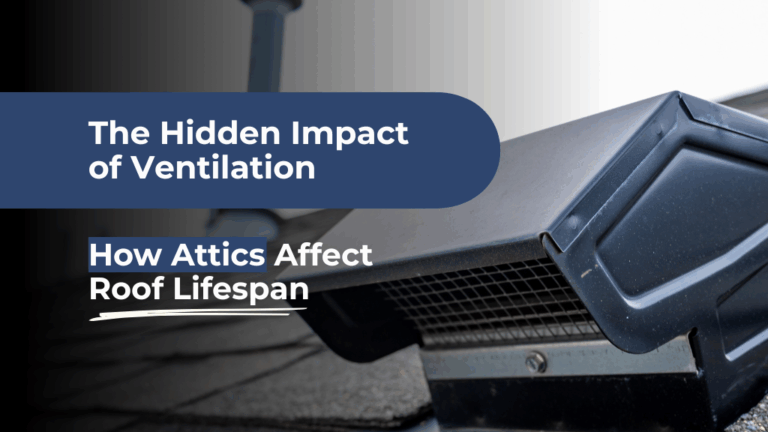

It’s not leaking… but something still feels off. You might not see water dripping from the ceiling. But if your upstairs rooms feel like a sauna in summer or your attic smells musty come spring, something’s not right.
Roof ventilation problems rarely announce themselves with dramatic leaks. More often, they show up as subtle signs: condensation on attic nails, frost on the underside of the roof deck, or unexpected spikes in heating and cooling costs.
In fact, some of the worst roof ventilation problems manifest quietly, such as heat being trapped in the attic or frost creeping in from the inside out.
In Ontario, with our mix of humid summers, cold winters, and unpredictable shoulder seasons, poor roof ventilation can cause year-round issues. Ice dams along the roof edge in February? Musty smells in April? Those could be early warnings that your attic isn’t breathing properly.
Gateway Exteriors frequently encounters this issue during roofing inspections. If you’re dealing with attic moisture, frost buildup, or signs of heat retention, it might be time to get a new roof. And if it’s caught early, it can be addressed before it leads to more significant structural problems.
What Roof Ventilation Problems Actually Do To Your Home
Your roof system depends on a balanced flow of air. Without it, warm, moist air gets trapped in the attic.
Over time, this leads to condensation on cold surfaces, such as roof sheathing and framing, which encourages mould, mildew, and even rot. It can also bake your shingles from underneath, cutting their lifespan short. If you’re unsure which materials hold up best over time, consider the pros and cons of different types of roofing materials.
Here are some of the most common signs:
- Damp or frosty attic surfaces
- Rusted roofing nails or metal fasteners
- Uneven temperatures between floors
- Ice dams are forming despite having a newer roof
- Musty smells that worsen seasonally
Beyond comfort and safety, poor ventilation can also void your shingle warranty if not addressed. Ventilation is a code requirement and a must-have.
What Homeowners Should Know About Roof Ventilation
Many people assume roof vents only release hot air in the summer. But proper ventilation works year-round. It helps regulate attic temperature and humidity in every season. This protects insulation, keeps roof materials from deteriorating, and prevents hidden moisture from building up.
Ventilation works through a balance of intake and exhaust. Cool, dry air enters through the soffit (eaves), and warm, moist air exits through roof vents or ridge vents. If that balance is off, such as having too few vents, blocked soffits, or an uninsulated attic hatch, the system fails.
Attic inspections are a simple way to catch issues early. Gateway includes ventilation checks as part of every roofing job. We’ll walk through what’s working, what’s not, and what options make sense.
Explore our roofing services to discover how proper ventilation integrates into a code-compliant installation.
How Ventilation Affects Your Energy Efficiency
Poor ventilation also affects your energy bills. In winter, warm air trapped in the attic melts snow unevenly, leading to ice dams and forcing your furnace to work harder to maintain stable temperatures. In the summer, attic heat radiates downward, driving up air conditioning (A/C) usage and cooling costs.
Even worse, if moisture builds up and damages your insulation, it loses its ability to retain heat or block external temperatures. That means your HVAC system is fighting a losing battle against an inefficient thermal envelope.
One benefit homeowners often miss? Solving roof ventilation problems can help ease the load on your HVAC system and improve its year-round efficiency.
With proper airflow, your attic stays closer to the outdoor temperature, easing the load on your heating and cooling systems year-round. According to Natural Resources Canada, warm interior air leaking into the attic increases both heat loss and moisture accumulation, something ventilation is specifically designed to manage.
Common Myths About Roofing & Ventilation
One of the biggest myths is: “If it’s not leaking, it’s fine.”
However, the truth is that leaks are often the last symptom. Attic condensation or moisture buildup can exist for months or even years before water physically penetrates your ceiling.
Other misconceptions we hear:
- “Only old homes have ventilation issues.”
- “You don’t need roof vents in winter.”
- “A few box vents are good enough.”
- “You can’t over-ventilate.”
In reality, improper combinations of vent types, such as mixing ridge vents with box vents, can disrupt airflow and reduce effectiveness. Over-ventilating or placing vents incorrectly can also create negative pressure, pulling conditioned air out of your home.
Ventilation balance, placement, and how well they work with your home’s insulation and roof structure is critical. It also plays a role in what’s covered (or not) under your roofing warranty.
Gateway scopes this properly. No pressure or upsell. Just a clear assessment of what’s needed to make your roof perform as it should.
Local Ventilation Issues To Watch For
Our service areas around Hamilton, Ancaster, Binbrook, and Stoney Creek come with unique roofing stress points:
- Hamilton: Heavy snow accumulation and older homes with legacy ventilation setups
- Binbrook: Fast-growing neighbourhoods with builder-grade installs that may cut corners
- Ancaster: High resale-value homes where attic issues can affect inspection reports
- Stoney Creek: Frequent freeze-thaw cycles that increase condensation risk
Ventilation protects a home’s value and prevents long-term damage. We see this especially during pre-sale inspections, insurance renewals, or after a big winter storm.
What To Do If You Think You’ve Got Roof Ventilation Problems
You don’t need to wait for a leak to take action. If you’ve noticed unusual attic temperatures, damp smells, or ice damming, it’s worth getting it checked.
Here’s what you can do:
- Book a professional attic or roof inspection
- Look for rusted nails or frost on attic surfaces
- Check for ceiling stains near exterior walls
- Note temperature differences between rooms
What To Expect During A Professional Ventilation Inspection
When you book with Gateway, we start by inspecting both interior and exterior ventilation components. That may include:
- Checking soffit vents for obstructions
- Inspecting ridge, gable, or box vents for airflow and placement
- Looking for signs of insulation blockage
- Identifying moisture patterns or heat buildup
You’ll receive clear documentation of what we find and where things can be improved.
We approach every project with transparency. If it’s a minor fix, we’ll let you know. If you’re wondering about the cost of delaying a roof replacement, the short answer is that it often becomes more expensive the longer it waits. If it requires further attention, we’ll explain why and scope it clearly.
Common Questions About Roof Ventilation
How do I know if my ventilation is balanced?
A balanced system features both intake (soffit) and exhaust (ridge or gable) vents, allowing for consistent airflow. Signs of imbalance include hot or humid attics, frost buildup, or uneven vent placement. A professional can measure airflow and inspect the vent function.
Does the building code in Ontario require roof ventilation?
Yes. The Ontario Building Code requires adequate attic ventilation to prevent the buildup of heat and moisture. If you’re replacing a roof or selling a home, code compliance is essential for both insurance and resale purposes.
Can I add more vents myself?
In theory, yes, but the bigger risk is doing it without a plan. Improper vent placement or mixing different vent types can make the issue worse. Always scope it with a pro first.
What if I already have ridge vents? Is that enough?
It depends. Ridge vents need a balanced intake at the soffit to function properly. Without that, they can’t draw air through the attic as designed.
How long does a ventilation fix take?
Most adjustments, such as adding vents, clearing blocked soffits, or resealing attic hatches, can be completed in a day or less. Full upgrades may take 2-3 days, depending on access and roof structure.
Can roof ventilation problems affect my home’s resale value or inspection results?
Absolutely. These issues often show up on home inspection reports or during insurance evaluations, especially if there’s mould, heat damage, or signs of poor airflow.